AI is at the top of almost every leadership agenda right now — and for good reason. Used well, it promises faster decisions, better forecasting, and real operational leverage. So most companies jump straight to the same question: What AI tools should we be using?
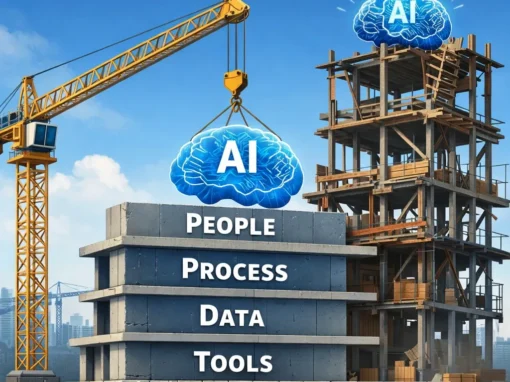
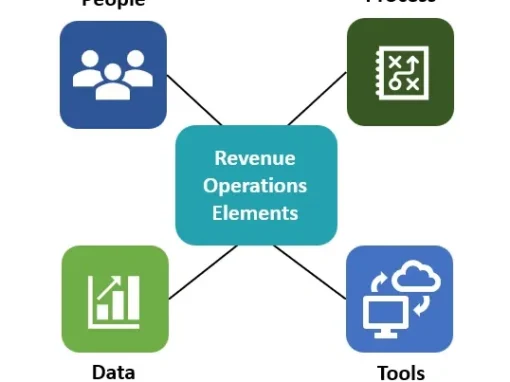
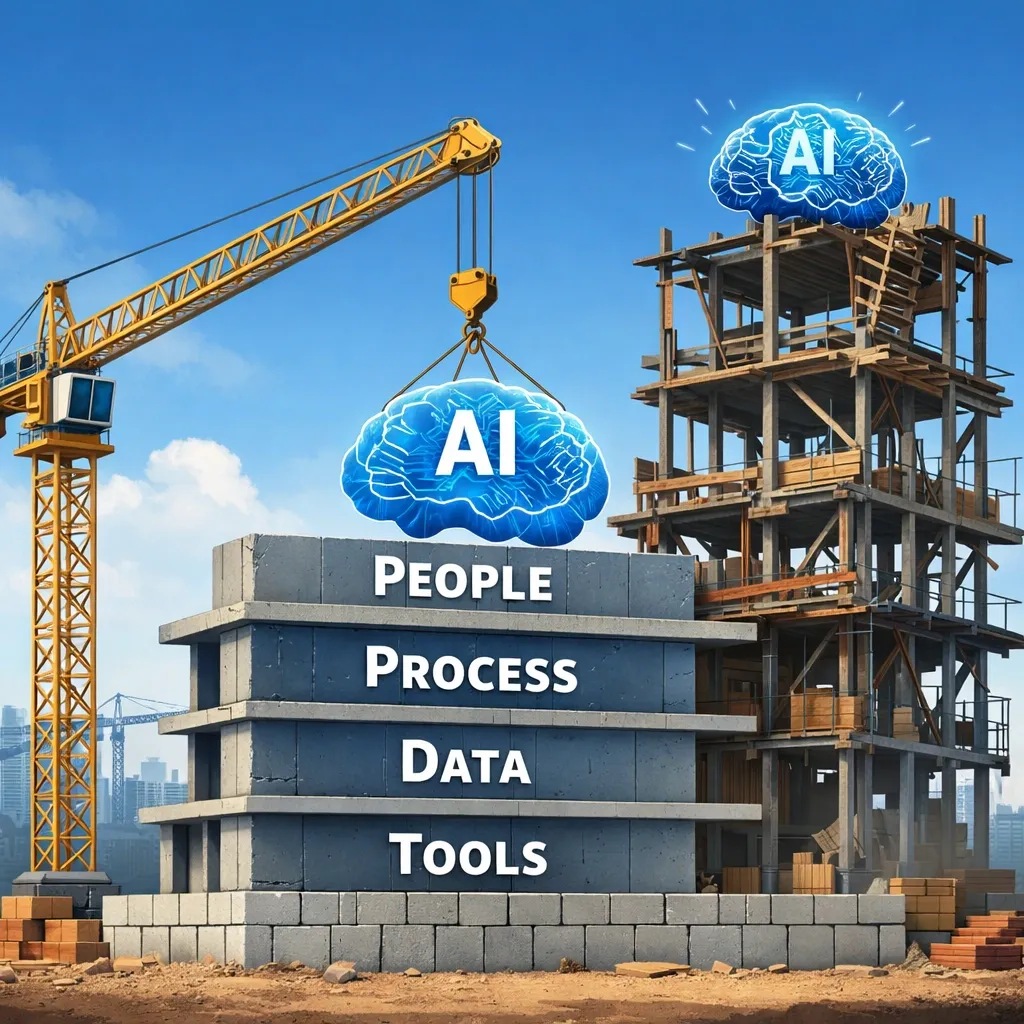
Well, I hate to break it to you. But that’s usually the wrong place to start. And it’s the reason why most AI initiatives are currently failing. The companies that struggle with AI don’t lack ambition or technology. They lack RevOps maturity. If you want AI to accelerate your business — not amplify your challenges — you need a foundational level of maturity across four pillars before implementation.
- People
- Process
- Data
- Tools
You don’t need to be perfect in every area. But if your maturity is uneven, AI will expose gaps — fast.
This is What Foundational RevOps Maturity Looks Like
People
Do You Have Enough People — With the Right Skills — to Do the Work? Because AI raises the bar for people. It doesn’t lower it. Before AI can create leverage, you need humans who can: define what “good” looks like, maintain process and data discipline and interpret outputs critically.
Signs of basic People maturity:
- Clear ownership for data, process, and systems
- Adequate capacity — not a team constantly stretched thin
- Core skills exist internally, not just in vendors
- Critical knowledge isn’t trapped in one or two people
Ultimately, AI magnifies capability gaps. It doesn’t fill them.
Process
Do You Have Process Discipline — or Just Exceptions? AI learns your process — not the one in slide decks, but the one people actually follow. If everything is treated as an edge case, you don’t have a process — you have chaos masquerading as work.
Signs of basic process maturity:
- Clear stages and steps that people actually follow
- Edge cases are documented — with a reason why
- Deviations are intentional, not habitual
- New hires can execute the process without tribal knowledge
When everything is an edge case, AI has nothing reliable to learn from. Also process discipline doesn’t mean rigidity. It means knowing why and when exceptions happen — and minimizing them.
Data
Is Your Data Hygienic — and Tied to Real Behavior? Data maturity is inseparable from process discipline. Messy process creates messy data — no AI model can fix that. AI doesn’t need perfect data. It needs predictable, consistent, trustworthy data.
Signs of basic data maturity:
- Shared definitions for core metrics
- Required fields are actually enforced
- The same actions produce the same data
- Leadership trusts the numbers enough to act on them
Bad data is rarely a data problem. It’s a behavior problem. Start with the data that drives real decisions: forecasting, capacity, pipeline health. Clean that first. Ignore vanity metrics.
Tools
Are Your Tools Supporting the Work — or Hiding Immaturity? Tools should reinforce maturity, not compensate for its absence. There is a saying:“A poor craftsman blames their tools.” AI tools don’t fix unclear ownership, undisciplined process, or bad data — they simply scale whatever already exists.
Signs of basic tools maturity:
- A clear system of record
- Minimal duplication across tools
- Spreadsheets aren’t covering structural gaps
- Tools are consolidated and intentional, not proliferated
Complexity is rarely sophistication. Most organizations need fewer tools — not more — before AI adds value.
Starting Steps to Achieve RevOps Maturity
Different organizations face different challenges depending on their starting point, and the work you need to do before AI depends on that reality. Here are three most frequent situations we encounter and how we recommend each one starts
1. New & Lean Companies
- Newer systems, smaller teams, minimal historical data
- Challenges: defining roles, building basic process discipline, enforcing consistent inputs
- Focus: People first, then simple processes, then foundational data hygiene
2. Older, Data-heavy or Messy Process Companies
- Lots of data across multiple systems, spreadsheets filling gaps, many informal workflows
- Challenges: multiple definitions, inconsistent process adoption, “edge case” culture
- Focus: Tighten process discipline first, standardize key data fields, clean what actually drives decisions
3. Complex / M&A-driven Organizations
- Multiple platforms, business units, or portfolio companies with differing practices
- Challenges: inconsistent definitions, fragmented processes, lack of shared language, and tool sprawl
- Focus: Establish shared language and process alignment across units, enforce data hygiene, then consolidate tools before layering in AI
The mistake is treating AI readiness as a universal checklist. The smarter move is sequencing maturity improvements based on your organization’s reality. Regardless, of starting point, across all types of organizations, the following sequence holds true:
- Build sufficient capacity and skills (People)
- Enforce process discipline (Process)
- Maintain data hygiene (Data)
- Consolidate and optimize tools (Tools)
- Then — layer in AI
The Payoff: AI as an Accelerator, Not a Liability
Once you’ve built a solid foundation across people, process, data, and tools, AI stops being a gamble and starts being a multiplier. You’ll be able to:
- Make faster, more confident decisions
- Scale operations without scaling chaos
- Reduce errors and rework caused by misaligned teams or messy data
- Unlock insights that actually drive business outcomes
The key is simple: slow down to speed up. Build your RevOps foundation first, then layer in AI. The better your maturity, the more leverage AI will give you — and the fewer headaches it will create.
In the coming weeks, we’ll dive deeper into each of these pillars with practical tips, checklists, and actionable strategies you can implement immediately. Start thinking about where your organization stands today:
- Are your people prepared to manage and interpret AI outputs?
- Is your process disciplined enough to support consistent results?
- Is your data reliable enough to trust the insights it produces?
- Are your tools optimized — or just masking gaps?
Answer these questions honestly. The stronger your foundation, the faster you’ll turn AI from a buzzword into a true business accelerator.